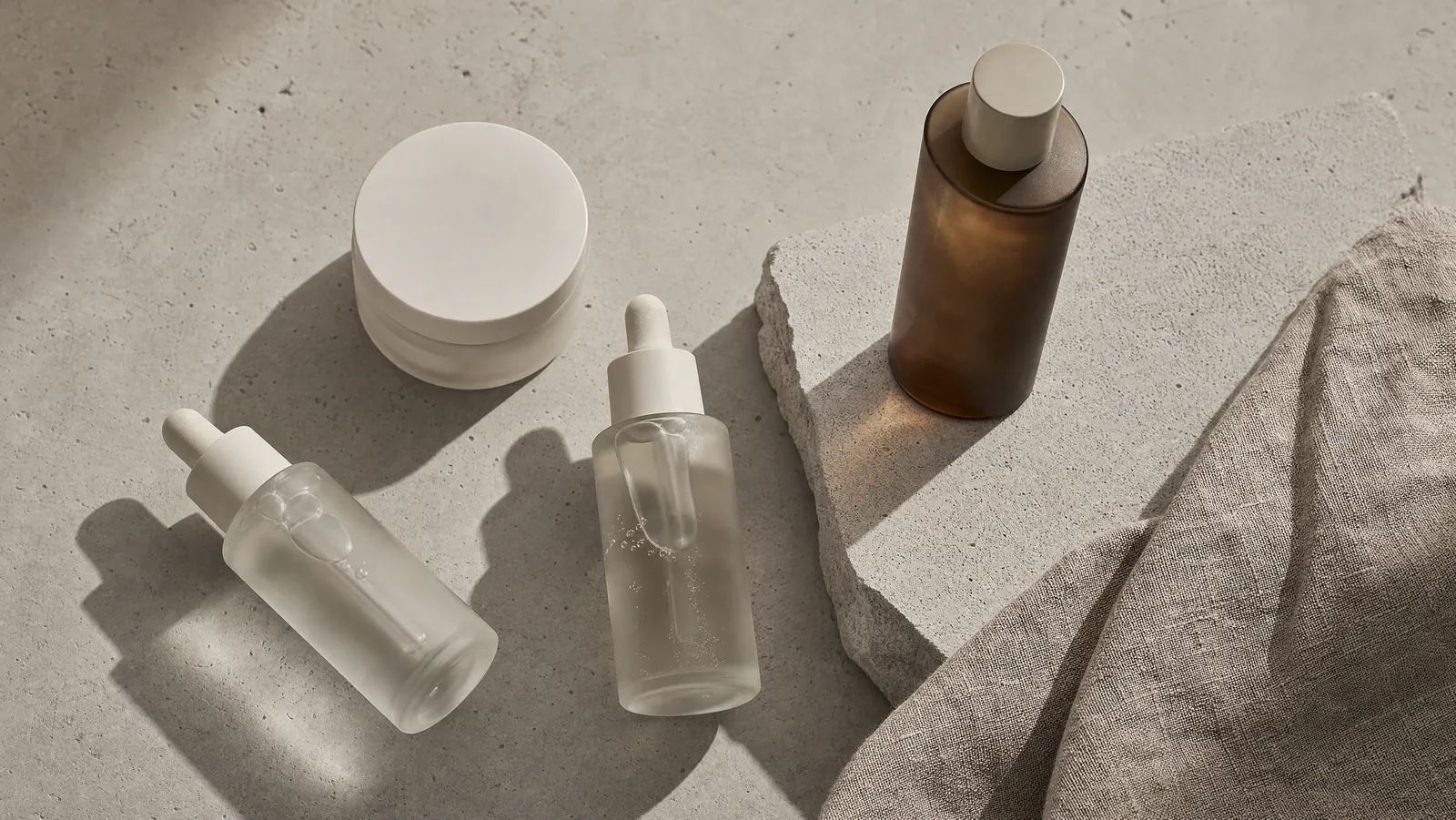
Korean Double Cleansing: How the Oil-Plus-Water Method Works

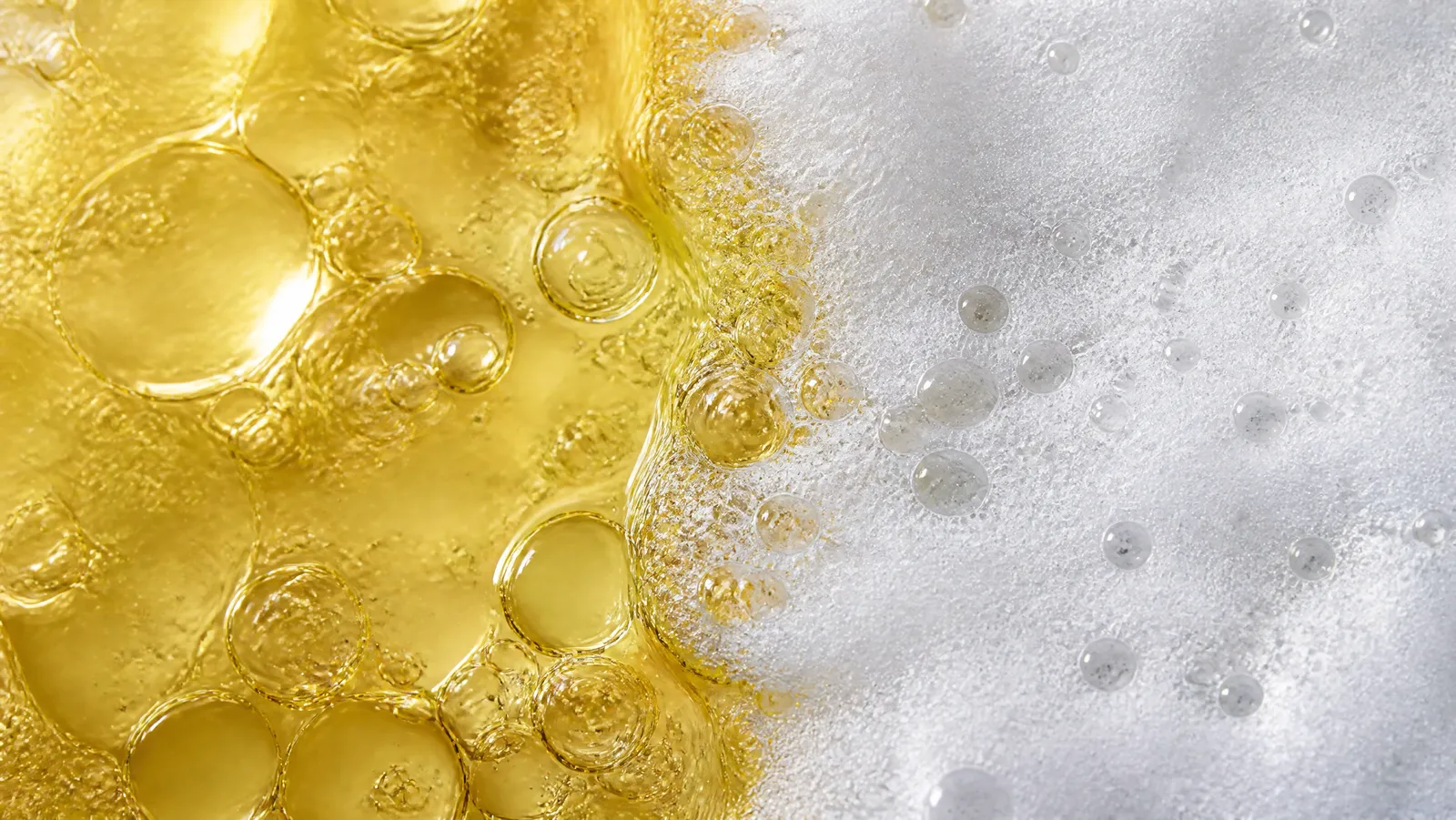
Korean double cleansing means washing your face twice at night, in a specific order: an oil-based cleanser first to melt off sunscreen, makeup, and the day's sebum, then a gentle water-based cleanser to lift the sweat and dirt the oil leaves behind. Two products, two different jobs, about two minutes total. That is the entire method.
Some guides I link to contain affiliate links, and if you buy through them I may earn a small commission at no cost to you. I resisted it for years because it sounded like a clever way to sell twice as many cleansers. Then I started wearing real sunscreen every single day, and my foaming wash stopped keeping up. Below I will explain the chemistry, walk through the details that actually change the result, and tell you honestly when to skip the whole thing. Double cleansing is step one of a complete Korean skincare routine, so it helps to see where it sits before you buy anything.
Why two cleansers instead of one
Everything sitting on your face at the end of the day falls into two chemical camps, and that split is the only reason this method exists.
According to Cleveland Clinic, oil-based cleansers remove oil-based impurities and excess sebum, while water-based cleansers, generally foaming ones, remove water-soluble impurities like sweat and dirt. The chemistry-class shorthand is "like dissolves like." Oil grabs oil. Water grabs water. Ask one product to do both jobs and you end up asking a detergent to strip the greasy half off by force.
Sunscreen is why this matters more than it used to. Modern UV filters are largely oil-soluble, and water resistance is engineered on top of that. As the formulation trade journal Cosmetics and Toiletries explains, film-forming polymers are added to sunscreen so the filters stay bound to skin inside a flexible, water-repelling film that survives sweat and swimming. That film is doing exactly what you paid for at noon. At ten at night, it is a coating built to resist water, which is why a quick foam can leave it behind. If you want the featherweight textures that make daily reapplication realistic, I keep a running list of the best Asian sunscreens.
Here is the nuance most explainers skip. Surfactants, the cleansing molecules in any foaming wash, already bridge oil and water. As cosmetic chemist Michelle Wong of Lab Muffin Beauty Science describes it, a surfactant has an oil-loving tail that grabs oily substances and a water-loving head that binds to water. So one cleanser genuinely can shift sunscreen. The argument for oil first is not that water-based cleansers fail, it is that dissolving grime with a solvent lets you get away with a far milder second cleanser.
That is the real payoff, and it is a barrier argument, not a deep-clean one. Cleveland Clinic notes that a properly cleansed surface may let the products you apply afterward penetrate better, and a clean but un-stripped face is the foundation of a glass skin routine. Hydrating layers cannot do much on a barrier you just scoured.
How to double cleanse, step by step
- Start completely dry. Dry hands, dry face, no splash first. A balm or oil needs undiluted contact to work, and wet fingers start emulsifying it too early. Warm a nickel-sized amount between your fingertips.
- Massage for 30 to 60 seconds. I count it out; rushing is where most people lose the benefit. Work slowly over the places sunscreen and makeup pile up: the hairline, the sides of the nose, the jaw, in front of the ears. Fingertips only, light pressure. The American Academy of Dermatology advises resisting the temptation to scrub, since scrubbing irritates skin, and notes that anything other than your fingertips can irritate it too.
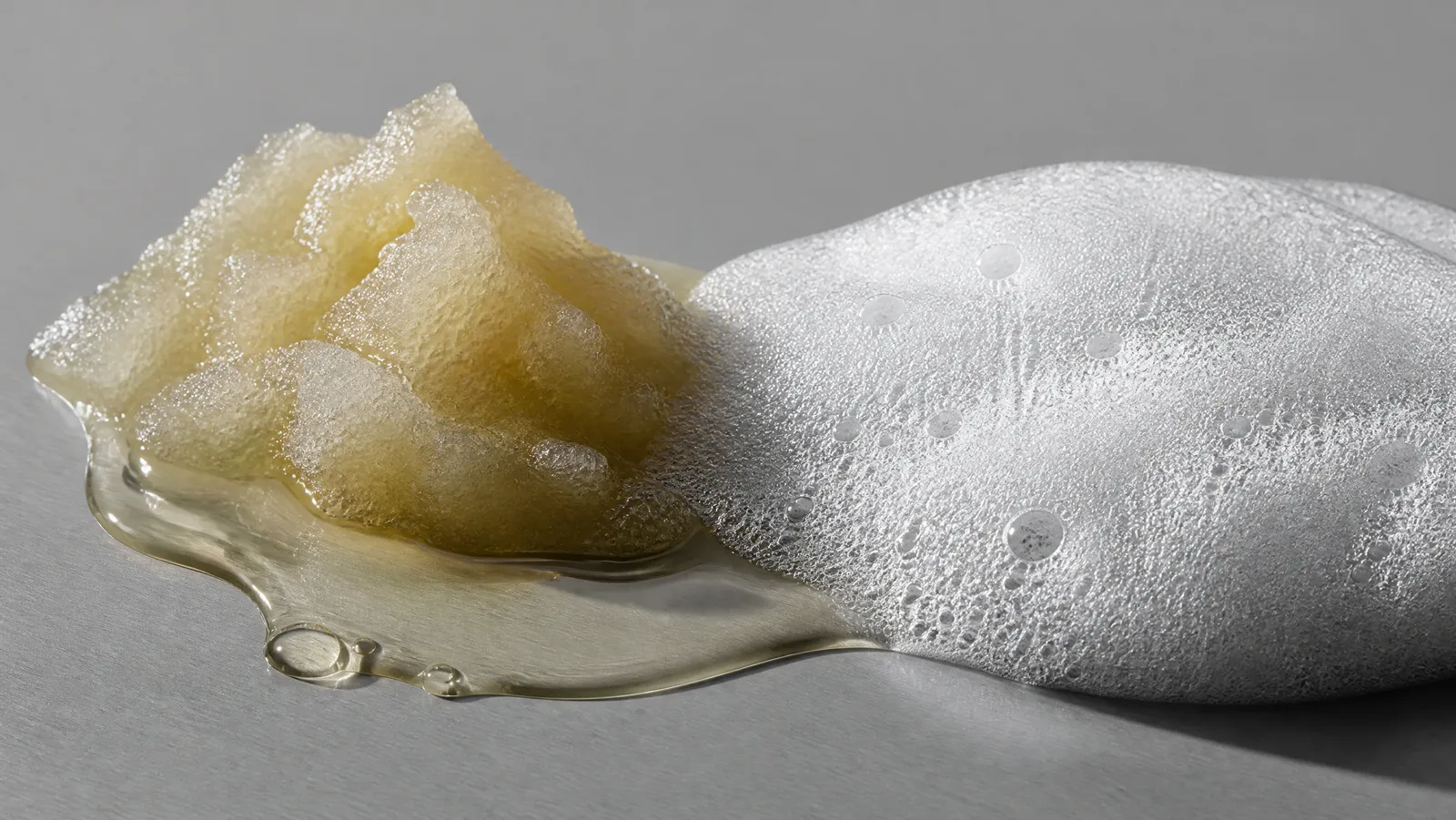
- Emulsify before you rinse. Add a small splash of lukewarm water and keep massaging another 15 to 20 seconds until the oil turns cloudy and milky. This is the step people skip, and in my experience skipping it is the most common reason double cleansing feels greasy. Then rinse thoroughly, still lukewarm. Cleveland Clinic specifically cautions that the water should not be too hot, because hot water can dry out your skin.
- Second cleanse on damp skin. Do not towel off in between. Work a small amount of your water-based cleanser between wet hands and massage for another 20 to 30 seconds. Less is genuinely more; most of us dispense two or three times what we need. Rinse lukewarm again.
- Pat, do not rub. The AAD recommends rinsing with lukewarm water and patting dry with a soft towel. Dragging a towel across a freshly cleansed face is free irritation.
- Move on while your skin is still slightly damp. Do not let your face air-dry for ten minutes. In its dry-skin guidance, the AAD advises applying moisturizer while your skin is still damp after washing, which is how you hold on to the moisture already in your skin. That window is when your toner and then your essence or serum go on. A snail mucin essence presses in nicely here if you like the texture.
Start to finish, this should take roughly two minutes. If it takes five, you are being rough, not thorough.
Choosing your two cleansers
Step one: balm, oil, or micellar water. A cleansing balm is a solid that melts on contact. It gives the most control and handles heavy makeup and thick sunscreen well. A cleansing oil is faster and spreads more easily, which is what I reach for on ordinary days when I am only removing SPF and sebum. Micellar water is its own category: water carrying cleansing micelles, convenient for a light day or a flight, but not really an oil cleanse, and you should rinse it off rather than leave it on.
Step two: low-pH gel, cream, or foam. This is where pH earns its spot on a label. According to a review in the Indian Journal of Dermatology, Venereology and Leprology, healthy adult skin surface pH is acidic, measured at 5.4 to 5.9 in adult men and slightly higher in women, within an overall range of roughly 4 to 6, and the enzymes that assemble the skin's protective lipid layers are active at acidic pH and inhibited at higher pH. The same review notes that frequent alkaline soap use causes a sustained rise in surface pH and impaired barrier repair, and that hand washing with alkaline soap can raise skin pH by a mean of about three units for up to 90 minutes afterward.
Cleanser pH also varies far more than the packaging suggests. A separate study in the same journal, measuring cleansers marketed for acne, found every cleansing bar tested was alkaline at pH 9.0 to 10.4, while liquid cleansers ranged from pH 3.0 to 8.0, and recommended acne cleansers be soap-free and either acidic or pH-balanced. That spread is why Korean brands printing "low pH" on the bottle is useful information rather than marketing noise.
Matching the pair to your skin:
- Oily or combination: a lightweight cleansing oil or gel-type balm, then a low-pH gel cleanser with a little foam.
- Dry: a richer balm, then a cream or milk cleanser. On low-grime nights, the balm plus a lukewarm rinse may be plenty.
- Sensitive or reactive: fragrance-free on both steps, and the shortest contact time you can manage.
- Acne-prone: be deliberate. Cleveland Clinic warns that for acne-prone skin an oil-based cleanser can cause breakouts, especially when used alone, so never let the oil step be your only cleanse. There is more to a Korean skincare routine for oily, acne-prone skin than cleanser choice, and I will go deeper on that separately.
If you want actual bottles rather than categories, see my roundup of the best Korean cleansers for picks by skin type and price.
The mistakes that make double cleansing backfire
I have made most of these.
- Washing too often. Cleveland Clinic is blunt that overwashing can lead to dryness, irritation, and breakdown of the skin barrier, and the AAD's guidance is to limit washing to twice a day and after sweating. A double cleanse is your one evening wash, not two.
- Water that is too hot. It feels wonderful and it dries you out. Lukewarm throughout.
- Skipping emulsification. Rinsing un-emulsified oil leaves a film, and your second cleanser then spends its energy fighting that film instead of your face. People blame the balm; the balm is fine.
- Choosing a harsh, high-pH foam for step two. If your face feels squeaky and tight afterward, that is not clean, that is stripped. Given how wide the pH spread on the shelf is, this is worth being picky about.
- Double cleansing in the morning. Nothing water-resistant lands on your face during eight hours of sleep. This is a nighttime practice; a splash of lukewarm water or one mild cleanse is all you need before your morning sunscreen.
- Bringing in a brush or a washcloth. The AAD's position is that anything other than your fingertips can irritate your skin. A cleansing device stacks mechanical friction onto a routine already running two rounds of surfactant.
- Turning it into a facial. Long, vigorous massage with a rinse-off product is not a treatment, it is friction with extra steps.
Do you actually need to double cleanse?
Sometimes the answer is no, and I would rather say so than sell you a second cleanser.
Cleveland Clinic states plainly that most skin types do not need to double cleanse, that it can be useful if you wear makeup or sunscreen, and that it may cause dryness and irritation if you do not need it. On the sunscreen question specifically, Michelle Wong of Lab Muffin Beauty Science concludes that a regular cleanser will remove water-resistant sunscreen, and that the case for double cleansing is comfort and gentleness rather than necessity.
So here is my honest decision rule:
- Probably yes if you wear long-wear or heavy makeup, reapply water-resistant sunscreen through the day, sweat a lot, or still feel coated after one wash.
- Probably not if your day is moisturizer plus a light sunscreen, if your skin runs dry, sensitive, or reactive, if you are using a retinoid, or if it is deep winter and your barrier is already complaining.
And the real test is not a routine chart. Wait five minutes after washing and check in with your face. Comfortable, soft, slightly plump means you got it right. Tight, squeaky, or stinging means you took off too much, and the fix is fewer steps, not more serum.
Frequently asked questions
What is Korean double cleansing in one sentence?
Washing your face twice in a set order at night: an oil-based cleanser to dissolve oil-soluble grime like sunscreen, makeup, and sebum, then a gentle water-based cleanser to clear away sweat, dirt, and residue.
Do I need to double cleanse in the morning?
No. Overnight your skin produces sebum and holds whatever you applied before bed, none of which needs an oil solvent. A lukewarm rinse or one mild cleanse is enough.
Can I double cleanse if I have acne-prone skin?
Plenty of people do, but sequence matters. Cleveland Clinic cautions that oil-based cleansers can cause breakouts in acne-prone skin, particularly when used on their own, so never let the oil be your only cleanse, and pick a light, fast-rinsing oil or gel balm over a heavy one. If your breakouts are painful, cystic, or leaving marks, see a board-certified dermatologist rather than reworking your cleanser.
Why does my skin feel greasy after an oil cleanser?
Almost always incomplete emulsification. Add lukewarm water while the oil is still on your face, keep massaging until it goes milky, then rinse for longer than feels necessary. If it still happens, the formula is probably too rich for your skin.
Will double cleansing clear my breakouts or shrink my pores?
It will not. Gentle cleansing may help keep pores clear of the sunscreen and sebum that settle in them, but cleansing is not a treatment for acne or any other skin condition, and pore size is not something washing changes.
Double cleansing is not a ritual you owe anyone. It is a targeted fix for one problem, an oil-soluble film that water alone struggles to lift, and if that is not your problem you can skip it with a clear conscience. If it is, get the order right, emulsify properly, keep the water lukewarm, and stop while your skin still feels comfortable. For where this step sits in the rest of the layering, and how to adapt it to your skin type, our Next Gen Beauty Reviews routine guide walks through every stage from first cleanse to sunscreen.
About the Author
Kelly Hyde
Kelly Hyde is a certified skincare specialist and beauty trend forecaster, and the founder of Next Gen Beauty Reviews. She spends her time testing the latest K-beauty launches, at-home beauty devices, and skincare tools so you do not have to, and only recommends products she would put in her own routine.