Essence vs. Serum vs. Ampoule: The K-Beauty Layers Explained

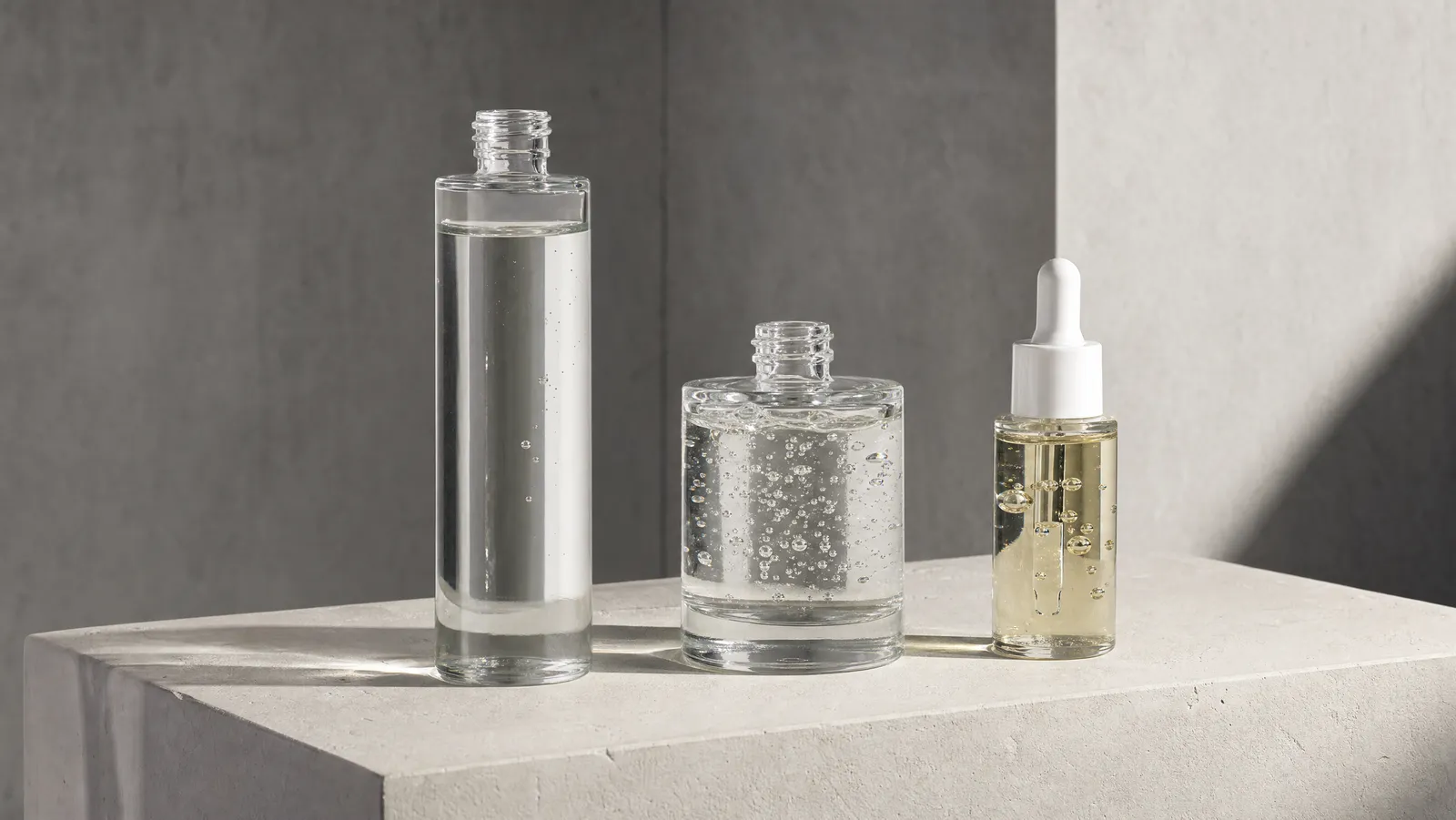
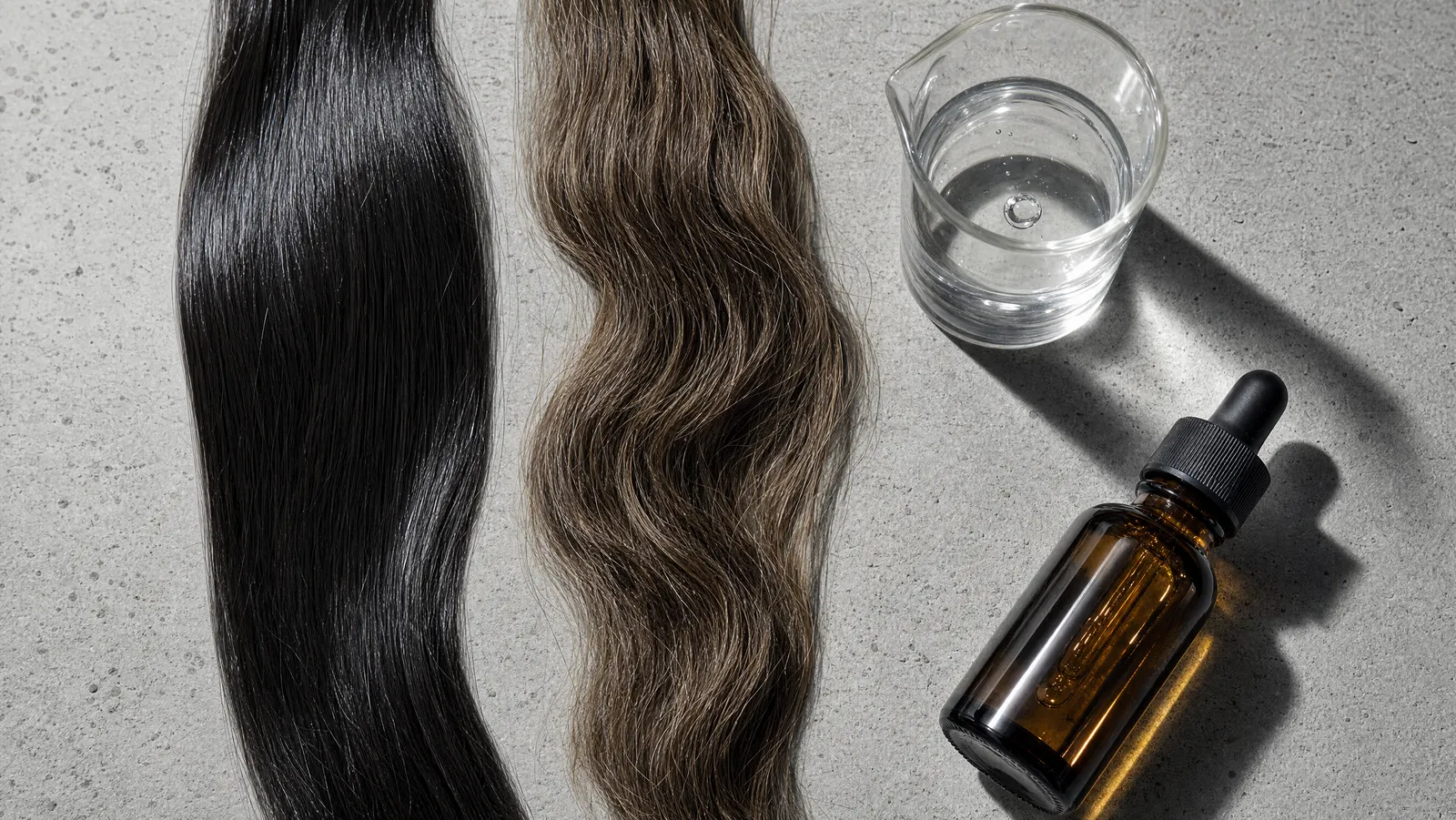
Three bottles sit on my shelf right now. Same clear glass, same eyedropper, same watery contents, same promise of hydration. One says essence, one says serum, one says ampoule. The short answer to essence vs serum is that these words describe concentration and texture, not a regulated or scientifically defined class of product. Essences are the thinnest and most watery, serums are more concentrated around a specific active, and ampoules are usually the most concentrated of the three. Nobody enforces any of it.
Some guides I link to contain affiliate links, and if you buy through them I may earn a small commission at no cost to you. I am a certified skincare specialist, and I owned all three of those bottles at once without being able to explain what any one did that the others did not. Below are the working definitions the industry mostly agrees on, where they fall apart, and how to read an ingredient list instead of a front panel. If you are still sorting out the order of the steps, start with layering a Korean skincare routine and treat this as the deep dive on one slice of it.
The short answer
Essence. A thin, watery layer applied after cleansing and toning, built mostly from water and humectants rather than one headline active. According to Dr. Jane Yoo, a board-certified dermatologist and fellowship-trained Mohs surgeon in Manhattan, essences are "thin, watery formulas applied after toner and before serum," and their main job is hydration and preparing skin for what follows. This is the layer people press in with their palms.
Serum. A step up in concentration and usually in viscosity. Dr. Yoo describes serums as "more concentrated formulas built around specific active ingredients," aimed at a particular concern such as pigmentation or fine lines. This is the workhorse step, meant to be used consistently over months.
Ampoule. Dr. Yoo calls the ampoule "the most concentrated of the three, typically formulated with a higher percentage of active ingredients," designed for short-term intensive use rather than daily indefinite application. The name comes from the sealed glass vial the format once arrived in.
Now the caveat most explainers bury. None of those definitions is enforced by anyone. In the United States these are cosmetics, and the U.S. Food and Drug Administration states plainly that "the law does not require cosmetic products and ingredients, other than color additives, to have FDA approval before they go on the market." The FD&C Act defines cosmetics by intended use, as articles applied to the body for cleansing, beautifying, or promoting attractiveness. It does not define an essence, and nothing sets a minimum percentage that makes something an ampoule. Dr. Yoo says the same: ampoule is not a regulated term.
Why the categories are so blurry
Nothing forces consistency, so brands name products whatever sells them.
The words get stacked. Walk any K-beauty aisle and you will find essence toners, toner essences, serum ampoules, ampoule serums, and essence serums. Those hybrids are hedging, not a fourth and fifth chemistry.
The same formula can wear two names. Since the category word carries no requirements, a brand can launch a formula as a serum in one market and an essence in another, or rename it on a relaunch, and nothing inside the bottle has to change.
Korean and Western usage drifted apart. The category was defined commercially long before Western brands adopted the word. SK-II says its Facial Treatment Essence launched in 1980 after researchers noticed that older sake brewery workers had unusually soft hands, and that years of screening yeast strains produced the galactomyces ferment filtrate it trademarked as Pitera. That is the brand's own account, not an independent finding, but it explains the shape of the category: a watery, ferment-forward treatment step, not a lightweight moisturizer. Western brands picked up the word later and mostly attached it to plain hydrating waters, which is why two products both called essence can behave nothing alike.
Texture does not obey the label. COSRX Advanced Snail 96 Mucin Power Essence, the archetypal snail essence, is thicker and more slippery than plenty of products sold as serums.
What actually distinguishes them
Ignore the noun on the front and compare bottles on axes you can actually observe.
- Viscosity and texture. Essences run closest to water and absorb almost instantly. Serums are thicker, from gel-fluid to light lotion. Ampoules are often the most viscous, though a concentrated water-based one can be thinner than a silicone-heavy serum. Texture is a clue, not proof.
- Concentration of actives. What the three names are really trying to communicate: essence lowest, serum middle, ampoule highest. It only reliably holds inside a single brand's lineup.
- How much of the formula is water and humectant. An essence is mostly water plus water-binding ingredients such as glycerin, hyaluronic acid, or a ferment filtrate. A serum built around one active spends more of its formula on that active and on keeping it stable.
- Price per milliliter. Divide price by volume before comparing anything. Ampoules ship in small bottles, which makes them look cheap on the shelf and expensive per use; essences tend to come in the largest, since they are meant to be used generously.
- Intended duration of use. Essences and serums are everyday steps. Ampoules are often positioned as a limited course, a short run of intensive use around a stressful stretch for your skin, matching Dr. Yoo's short-term framing.
If two products score the same on all five axes, they are the same kind of product no matter what the label calls them.
The layering order, and why thin-to-thick works
The practical rule is simple: apply the thinnest, most watery product first and finish with the richest. This is a sensible heuristic, not a law of dermal penetration, and it is worth knowing why it holds up.
The usual explanation, that small molecules must go first to fit through the skin, does not survive scrutiny. Cosmetic chemist Michelle Wong of Lab Muffin Beauty Science notes that molecular size is only one aspect of how thick a product feels, and offers a counterexample: trilaurin, the main component of coconut oil, weighs around 600 daltons, while even ultra low molecular weight hyaluronic acid is around 6000 daltons, and everyone still says put the hyaluronic acid underneath. Her actual reason for the order is water management, so that "you're more likely to have oils at the top and water underneath, so you can try to trap water under the oil." She adds that for most ingredients the order probably does not change absorption much, since nothing in skincare forms a truly impenetrable film.
That makes the sequence obvious. Cleveland Clinic describes humectants as ingredients that attract and bind water to your skin, naming glycerin, hyaluronic acid, and urea, while occlusives such as petroleum jelly and lanolin add no moisture but help skin hold what it already has. Humectants need available water; occlusives keep it from leaving. Two practical notes:
- Apply to damp skin. The American Academy of Dermatology recommends applying moisturizer while skin is still damp after washing. Same logic here: do not let your face air-dry before your essence.
- Backwards, and you know immediately. Put a rich cream down first and your watery essence beads, slides, or pills on top instead of sinking in. Not a disaster, just wasted product.
That first watery layer is the one people shop for by name rather than function. If you want actual bottles instead of categories, here are the best Korean toners.
Do you actually need all three?
No. I have never run all three at once and felt the third was earning its slot.
An essence is worth adding if your skin runs dry or dehydrated, you face hard winters or dry air, your actives sting on bare skin and a hydrating buffer helps, or you enjoy pressing in a watery layer. That last reason is legitimate. Routines you like are routines you keep.
One good serum is the better answer if you have a specific concern to treat, your skin is oily and extra layers feel like a lot, or your budget and your mornings are finite. Serum plus moisturizer plus sunscreen is a complete routine.
An ampoule is a maybe. Treat it as an optional short course, not a permanent step. If you already use a strong serum, an ampoule with the same active mostly stacks irritation risk.
The failure mode to avoid is buying the same humectant three times in three textures. If your essence, serum, and ampoule all list water and glycerin at the top and none contains an active you actually chose, you own one product in three bottles. The clearest example of an essence that earns its slot is a mucin-forward one, because it brings something the other steps are not giving you; I have written up what snail mucin does and where that evidence is strong and where it is thin. If you are new to this, keep it to cleanser, one treatment, moisturizer, and sunscreen for a few months. A Korean skincare for beginners approach is deliberately short, and you can add layers once you know how your skin behaves.
How to read the label instead of the name
The front of the package is marketing. The ingredient list is regulated, and it tells you more in ten seconds than the category word ever will.
Ingredients are ordered by how much is in there, up to a point. Under the U.S. cosmetic labeling rule at 21 CFR 701.3, a label must declare each ingredient in descending order of predominance. The exception matters: brands may instead group them, listing everything above 1 percent in descending order, then everything at 1 percent or less in any order, then color additives in any order. So position is meaningful near the top of the list and stops being meaningful near the bottom.
In practice. If the active you are buying the product for sits after the preservatives, fragrance, and gums, it is present at a small percentage and its exact rank is unknowable. If it is in the first five ingredients, it is a real part of the formula.
Look for a disclosed percentage, and the form of the active. Some brands print concentrations, and that number beats the category word every time. Form matters as much: centella asiatica (cica) is the clean example, because a formula standardized around specific isolated compounds is a different proposition from one carrying a general leaf extract, and neither essence nor ampoule tells you which you are holding.
Frequently asked questions
Can I skip the essence?
Yes. An essence is an optional hydration layer, not a required step. If your skin feels comfortable and your moisturizer is doing its job, skipping it costs you nothing.
Is an ampoule just an expensive serum?
Sometimes, honestly. Within one brand's lineup the ampoule is usually the most concentrated formula, meant for short-term intensive use. Across brands the word is unregulated and carries no minimum concentration, so an ampoule from one house can be weaker than a serum from another. Check the ingredient list and the price per milliliter first.
What is the difference between an essence and a toner?
Genuinely fuzzy, which is why hybrid essence toners exist. Traditionally a toner went on right after cleansing and an essence followed as a richer hydrating step. Today many hydrating toners and many essences are close to the same formula, so pick by texture and ingredients, not by name.
Can I use two serums at once?
You can, thinner one first. Just be deliberate: stacking several strong actives in one sitting is an easy way to talk yourself into a compromised barrier, and if your skin starts stinging or flaking, cut back. If irritation persists after you simplify, that is one for a board-certified dermatologist.
Does the order really matter?
Practically yes, chemically less so. Thin to thick stops products pilling and keeps water-binding layers under something that slows evaporation. Consistency matters more than sequence.
Essence, serum, and ampoule are three points on a spectrum of concentration and texture, drawn by marketing departments rather than regulators. That is not a scandal, just useful to know, because it means the only questions worth asking are what is in the bottle, how much of it, how it feels on your face, and what it costs per milliliter. Answer those four and the category word stops mattering. For where each step sits in a full layering sequence, from first cleanse to sunscreen, the Next Gen Beauty Korean skincare guide walks through it in order.
About the Author
Kelly Hyde
Kelly Hyde is a certified skincare specialist and beauty trend forecaster, and the founder of Next Gen Beauty Reviews. She spends her time testing the latest K-beauty launches, at-home beauty devices, and skincare tools so you do not have to, and only recommends products she would put in her own routine.